Hiring a Freelance AI or Chatbot Developer in India
AI is the most in-demand freelance skill of 2026, and India is one of the largest markets for it. If you want to hire a freelance AI or chatbot developer in India, you will find plenty of people who can build something that looks impressive in a demo. The skill that is genuinely scarce — and the one you are actually paying for — is building AI that works in production, with real users, at a cost you can sustain.
This guide explains what freelance AI work involves, what it costs, and how to hire well. It is written by a Rajkot-based AI team that ships agents and chatbots for clients in India and overseas. For the wider hiring picture, see our pillar, Hire Freelance Developers in India.
What You Are Actually Hiring For
"AI developer" spans several distinct kinds of work:
- Chatbots and conversational AI — assistants built on GPT, Claude, or Gemini with proper conversation design. This is not just placing a chat widget on your website; it means writing system prompts that reliably produce the right tone and scope, designing conversation flows that cover the 80% of questions you know about and gracefully handle the 20% you cannot predict, and connecting the bot to the real data it needs to answer usefully.
- AI agents — systems that take actions, not just answer: booking, retrieving, triggering workflows. An agent might check your CRM for a customer record, draft a reply, and log the interaction — without a human in the loop. See what AI agents are for business.
- RAG — Retrieval-Augmented Generation grounds an LLM in your own documents so it answers from your knowledge base, not the open web. A 50-person consulting firm with 300 internal SOPs can use RAG to give every junior consultant instant access to institutional knowledge without them hallucinating answers they do not have. Our RAG chatbot guide covers how this works technically.
- LLM integration — wiring AI into an existing product cleanly, with cost control and fallbacks. This includes handling API rate limits, building caching layers so repeated queries do not burn tokens, and structuring outputs so your application can parse them reliably.
Most freelance AI work is integration and application development on top of existing models, not training from scratch. Training a custom model requires large datasets, GPU clusters, and months of iteration — very few business use cases actually need it. Be clear about which you need before you hire.

The Demo-to-Production Gap
The most important thing to understand: an AI chatbot that works in a controlled demo is easy to build in 2026. One that works in production is much harder, and the hard part is invisible in a demo —
- a precise system prompt that produces consistent behaviour across hundreds of different phrasings of the same question,
- conversation flows that survive how real users actually talk — terse, misspelled, off-topic, switching subjects mid-thread,
- edge-case handling for when the model is wrong, confidently wrong, or wrong in a way that damages your brand,
- testing against real behaviour and adversarial inputs, not just the happy path the developer wrote,
- and cost monitoring so scale does not produce a surprise bill.
Consider a concrete example: a 12-person law firm wanted an intake chatbot to pre-qualify potential clients before a consultation call. The demo worked well on clean questions like "I need help with a contract dispute." In production, real visitors asked things like "my landlord is being a pain can you help," "does my husband need to know," and "I got a letter from the council." The chatbot that handled the demo collapsed on these. The one worth shipping required three rounds of prompt refinement, a classifier to detect sensitive topics and route them to a human, and a fallback message for anything below a confidence threshold. None of that was visible in the demo. A freelance AI developer worth hiring raises these unprompted. We go deep in AI agent conversation design.
What It Costs
AI projects range from a simple FAQ bot to a multi-step agent integrated across your systems. Expect to see three broad tiers of scope:
| Project type | What it includes | Indicative range (INR) | Typical timeline |
|---|---|---|---|
| FAQ / support chatbot | System prompt, 1–2 data sources, basic flows | ₹40,000 – ₹1,20,000 | 2–4 weeks |
| RAG knowledge assistant | Document ingestion pipeline, vector search, fallback handling | ₹1,20,000 – ₹3,50,000 | 4–8 weeks |
| Multi-step AI agent | Tool use, CRM/API integrations, guardrails, monitoring | ₹3,50,000 – ₹10,00,000+ | 8–16 weeks |
Indian freelance rates for senior AI work sit far below US and UK equivalents — the comparison is in Freelance Developer Rates: India vs USA. The bigger cost driver is scope and reliability: a production agent with guardrails and testing is simply more work than a demo, wherever it is built. The ongoing token cost also deserves attention: a chatbot handling 5,000 conversations a month with GPT-4o can cost $150–$400 per month in API fees depending on message length and caching strategy. A developer who does not plan for this is leaving you with a hidden operating cost you did not budget for. For the full budgeting picture, see AI agent cost and ROI.
How to Vet a Freelance AI Developer
- Ask what happens when the AI is wrong. Good answers cover fallbacks, human escalation, and testing. Weak answers treat the AI as always correct.
- Ask about token cost and caching. They should know how to keep a feature affordable at scale — semantic caching, prompt compression, model tiering (using a cheaper model for simple queries, a stronger one for complex ones).
- See a live, deployed AI feature handling real interactions — not a notebook or a demo with hand-picked inputs.
- Ask how they handle prompt injection. If your chatbot will interact with untrusted user input (which is almost always), a developer who has not thought about prompt injection is a liability.
- Run a small paid trial on a slice of your real use case — give them 50 real user queries from your support inbox and see how they approach building and testing against them.
For the full list, see developer red flags and how to evaluate AI agent vendors.
What to Expect in Practice
The first two weeks of any AI engagement should produce a working prototype against your actual data, not a polished demo against synthetic inputs. If a developer cannot show you something functional with your own content within that window, the project has a structural problem.
A realistic timeline for a production-grade chatbot looks like this: week one is requirements and data audit — what questions will the bot answer, what data sources exist, what should it never do. Week two is a rough prototype with the real data pipeline in place. Weeks three and four are iteration against real user queries, prompt refinement, and edge-case coverage. Week five onward is integration into your product, staging testing, and monitoring setup.
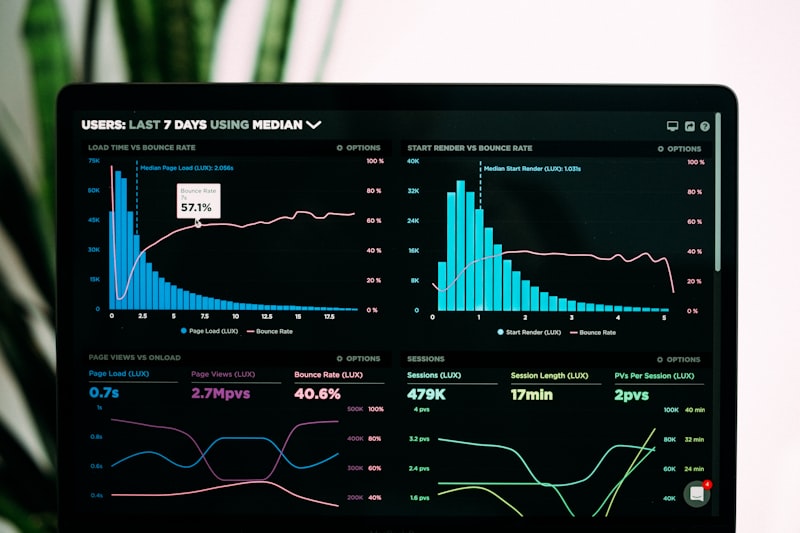
What often gets skipped by less experienced developers: conversation analytics. You need to know which questions the bot could not answer, which answers users rejected, and where conversations dropped off. Without that data, you cannot improve the bot post-launch. A good developer instruments this from the start, not as an afterthought.
Common Mistakes When Hiring Freelance AI Developers
Hiring on portfolio alone. An impressive chatbot demo tells you nothing about how the developer handles failure modes. Ask specifically about a project that went wrong in production and what they did.
Skipping the data audit. Most businesses think their data is ready for AI. It is usually not — inconsistent formats, outdated documents, missing categories. A developer who starts building without auditing your data will hit these problems mid-project and you will pay for the rework.
Treating scope as fixed. AI development is iterative by nature. A fixed-price contract for a fixed scope usually ends in either a developer cutting corners on testing or a client getting surprised by a change-order bill. A phased milestone structure with room to adjust works better.
Ignoring model costs in the project spec. Monthly API costs are an operating expense that belongs in your budget conversation before the project starts, not after go-live.
Not establishing who owns the prompts and configurations. A chatbot's system prompt is intellectual property. Make sure your contract specifies that the prompt, the vector database, and all configurations are assets you own and receive on handover.
Freelancer or Small Team?
A solo freelancer suits a bounded, well-specified chatbot — something like a FAQ bot for a single product with a clean knowledge base and a clear user base. But most AI features touch your frontend, backend, data, and existing product — coordinating that across separate freelancers becomes its own project. The back-and-forth between a freelance AI developer and a separate frontend contractor often adds two to three weeks to timelines and creates gaps in ownership when something breaks.
A small team covering AI, web, and design in one engagement removes the integration overhead. For a 20-person e-commerce business adding an AI product advisor to their Shopify store, a team that can handle the chatbot logic, the product data pipeline, and the frontend widget in a single engagement will ship faster and with fewer post-launch surprises than three separate contractors who have never worked together. We weigh it up in Freelance Developer vs Agency.
Related guides
- What an AI chatbot developer actually builds
- Chatbot development cost in 2026
- WhatsApp AI chatbot for business
- Hire a freelance AI developer in Rajkot
- Our AI chatbot development services
Working With Us
Woyce is a Rajkot-based AI and web development team. We build production AI agents, chatbots, and LLM integrations — and the applications they live inside — for clients across India and abroad. Hire us for one feature or as an ongoing partner.
See our AI agent development services, and book a call to talk through your use case with a senior engineer.
Frequently Asked Questions
How much does it cost to hire a freelance AI chatbot developer in India?
For a basic FAQ or support chatbot, expect to pay between ₹40,000 and ₹1,20,000. A RAG-based knowledge assistant with a document ingestion pipeline typically runs ₹1,20,000 to ₹3,50,000. Multi-step agents with CRM integrations and monitoring start at ₹3,50,000 and go up depending on complexity. These figures are for the build; ongoing API costs (tokens, hosting) are separate.
What is the difference between a chatbot and an AI agent?
A chatbot answers questions. An AI agent takes actions — it can look up a record in your CRM, send an email, book a slot in a calendar, or trigger a webhook — without a human approving each step. Agents are more capable but also more complex to build safely. Most businesses start with a chatbot and add agent functionality as they understand what their users actually need.
Do I need to train a custom AI model, or can I use an existing one like GPT or Claude?
Almost certainly an existing model. Training a custom model requires labelled datasets in the tens of thousands, GPU compute, and months of iteration. The practical alternative — and the right choice for 95% of business use cases — is prompting, fine-tuning, or building RAG on top of GPT-4o, Claude, or Gemini. Custom training only makes sense when your domain is highly specialised and existing models consistently fail on it even with good prompting.
How long does it take to build a production-ready AI chatbot?
A basic chatbot can be production-ready in two to four weeks if your data is clean and requirements are clear. A RAG assistant with a real document pipeline typically takes four to eight weeks. A multi-step agent with integrations, testing, and monitoring is an eight to sixteen week engagement. These timelines assume you can provide real user queries and feedback during development — projects that wait until the end to test against real data always run over.
What should I check before handing over access to my business data?
Confirm the developer signs an NDA before you share any internal documents or customer data. Clarify which country the data will be processed in (relevant if you have GDPR or data residency obligations). Ask which third-party services — vector databases, AI APIs, hosting — will receive your data, and review their data retention policies. Finally, confirm in your contract that all data, prompts, and configurations are returned or deleted at project end.
Can a freelance AI developer build a chatbot that integrates with WhatsApp or other messaging platforms?
Yes, this is straightforward using official APIs — WhatsApp Business API, Slack, Teams, Telegram. The integration itself is not the hard part; the chatbot logic and data pipeline behind it are. One practical note: WhatsApp Business API requires a Meta-approved business account and has template message restrictions for outbound messages. Factor in two to four weeks for that approval process if you do not already have it.
How do I know if an AI chatbot is actually working after it goes live?
You need conversation analytics from day one — not just "did the user get an answer" but "did they accept it" and "where did the conversation end." Track deflection rate (percentage of queries resolved without human escalation), escalation rate, and average conversation length. Most platforms expose session logs; a developer should instrument these and set up a simple dashboard before handover. Without this data, you are flying blind on whether the bot is actually helping your users or quietly frustrating them.